Monday, August 13, 2012

Freedom of speech


This is, as anybody who has read entries here before has realized, not a political blog. Of course, I do have opinions on political issues, some of them are even very strong opinions, and I cast my vote in general and other elections. I try to ride my bike wherever possible, buy more and more organically grown food, and I carry toads across the street in spring to save them from being squished by cars. But these opinions are not at the core of what I write about here.
Nevertheless, in these not quite two years of writing a blog I have repeatedly realized that writing a blog can be a serious political activity. Not only because I have written about Ai WeiWei’s blog as a book and imprisonment, and voiced an opinion on the apparent injustice of treatment he has received from his government.  I have witnessed the numerous Arab revolutions from a looker-on’s perspective and am worried about the various kinds of effects the developments in these countries may have on people’s lives. Did the Egyptian demonstrators really want the kind of government they are now getting, just to mention only one example? How are the new Arab governments going to affect women’s lives in these countries – women who demonstrated for more liberty in their lives?
And I have followed the reports on developments in Russia – how is it possible that a one-minute-performance by a (female) punk band in a church which used the text genre of prayer, “praying” for the removal of the current head of state, can be the reason for a Stalin-style trial?

"Pussy Riot" in glass cage at their trial in Russia -
photo downloaded from spiegel.de

The right to freedom of speech is a political right which is not granted to everybody in a manner as I have been lucky to experience. I admit that I have a rather critical opinion about many things happening in Germany, but I do value and appreciate the basic right to freedom of speech that is granted to me and every other citizen by our constituion. And blogging, even about minor  and seemingly unpolitical things, is a means of putting this basic right into action.
I have had an experience where somebody called me on the phone about a blog entry, blaming me for causing another person harm in her job. How could I do this, and I must be more considerate about other people’s situations, strongly requesting that I remove that specific entry entirely. At first I was taken aback – of course I do not want to harm anybody through anything I write on this blog. So I went back to that particular entry and checked everything I had written. I had to conclude that the difficulties the caller referred to must have been caused by the malfunctioning situation of the particular person’s working situation, namely that she and her superior just did not get along. Nothing I had written could possibly be taken as harmful to that particular person by any outsider, but had been severely twisted around to be harmful for her. I had not criticized her personally, I had not mentioned her name, all I had done was that I had mildly criticized the museum she was working for as a freelancer for not making the most out of some of their items on display. In the end, I did not change any part of the entry except that I removed one picture.
This took place on a very small scale only – but in hindsight I realized that somebody was trying to interfere with my right to freedom of speech. Even if I had raved about the quality of that person’s work, said that I did not like her, perhaps even mentioned her name, it would still have been my personal right to express that opinion. And I don’t really need to be diplomatic about something I don’t like if I don’t feel like it – in most instances I would, however, probably try to formulate criticism in a not-too-blunt manner. Nobody should have dared call me up to try and bully me into removing the post from the blog. Instead, there is an opportunity to execute their personal right to freedom of speech by leaving a comment in the comment box, which might lead to an open discussion about certain issues.
Simply writing a blog is a political activity, even if it is a blog about something as un-political as quilts and my personal experiences with art. I am deeply grateful to have this opportunity of voicing my opinion, no matter how much or how little importance this particular opinion may have, without having to fear to be thrown into jail for many years, or put under house-arrest for one year. Thank you to every single reader – because by reading what I write you show that there also exists that other side to the right to freedom of speech: the freedom to hear/read other people’s opinions so that you can enrich and broaden your own.

Thursday, August 9, 2012

Impressions from serving as a jury member


In the end of July I had the honour of serving as one of three jury members for the competition in Ste. Marie-aux-Mines.
We received two photos of each quilt entered on a USB-stick: one full view, and a detail. In addition, the stick contained an excel-file in which we were to enter our points. We had to judge four different criteria – relevance to the them, composition, technique, and originality. These points were added together, thus each quilt could earn a total of no more than 20 points. The quilts were numbered, so we did not know any names of makers. Not even now do we know who made the quilts that were selected. Only in September will we know, when we get together to chose the best of show.
It was a very interesting and instructive experience! I myself had received a rejection of two of my quilts which I had entered for SAQA’s „Wide Horizons III“ just on the morning when I started my jurying. So I was very much and acutely aware of the fact how deeply disappointed one feels upon receiving a rejection. Especially since the competition’s topic, “Yesterday, today, tomorrow” was one that elicited some very personal quilts. Which in turn might result in even stronger feelings of disappointed upon rejection.
Overall, I was surprised by the low number of entries – a total of only 93 quilts had been signed up. And I was slightly disappointed with the quality of the quilts entered. Certainly, there were some which were really good, and I did give top marks of 20 to three of the quilts. (I thought I was being very strict – but the other two members of the jury did not give perfect scores to any of the quilts.) But the additions of the individual scores also showed clearly and easily which 32 quilts would be my personal selection.
This procedure was followed individually by the other two jurors as well – LibbyLehmann from the USA, and LindaColsh, an American living in Belgium. We then communicated by e-mail and would have also skyped if there had been severe differences in judgements, but we were able to solve everything by e-mail in the end. All three jurors’ scores were added, thus giving us a final score for each of the quilts. Our scores certainly differed  for some of the quilts, which I take to be a very good sign. That way there were fair chances for quilts of different styles to succeed. In the end, our judgement was uncontroversial, though. The only bit of discussion we had was when we had to decide on a substitute for one quilt, because we had chosen two by the same maker, which is not allowed, but even that was solved quickly.
So the whole process of jurying and communicating with the other jurors was a great experience of co-operation.
I was rather annoyed with the quality of some of the photos, however. Some of them were out of focus – which is not bound to make a positive impression on jury members who want to take a closer look at details or parts of the quilt. Many pictures had a low number pixels, i.e. photo size – again, that does not help when a jury member wants to zoom into the picture and look at something more closely. Some of them were cropped – do I see the entire quilt here, or what? Some of them were crooked. When I look at a photo for jurying I don’t want to have to hold my head slanted in order to get a good upright impression of what I am looking at.
Add to that the fact that several of the statements included referred only to the technique used, but did not give a clue about the relevance to the topic. And indeed there were some quilts which would have needed such an explanation as the relevance to the topic was not obvious on first sight. And there were some statements which included so many mistakes that it did not necessarily help in making the relevance to the topic any clearer.
From these experiences I want to point out several points which somehow seem obvious but definitely need to be adhered to in a much more particular way. When entering a quilt in a competition in which photos are the basis for first rounds of judgement, please

  • Make sure that somebody takes the picture who really knows what s/he is doing. It might be a very worthy investment of taking the quilt to a photographer and having a professional picture taken. Make sure that the quilt is depicted straight, that nothing is cropped, and that ever part of the quilt is well lit.
  • When taking the photo yourself, make sure that you have the settings on a 5 MB file. It will make it a lot easier on the jury to zoom in and look at specific details – which in turn will help the chances of your quilt!
  • For a detail shot, chose an important section of the quilt, where the technique used can be seen, or which is vital for the composition. A detail of an uninteresting background section is not what the jury is looking for.
  • Make sure that your statement is grammatically correct, in what ever language you are using. If you are not sure about your English, please have somebody look it over, or get somebody for the translation. Statements with too many mistakes in them do not help the chances of selection ...

I do wish everybody success when they are entering for a competition or show. However, a jury must always select only a small set of the quilts entered – rejections are bound to happen to any of us. Just don’t take them personal.

Sunday, August 5, 2012

New function: SAQA co-rep for Europe/Middle East


In January I filled out some questionnaire for SAQA, which ended with a question whether I would be interested in being more active in the advancement of SAQA, to which I ticked a “yes”. Only a few weeks later I received an e-mail whether I would want to become the co-representative for SAQA for the Europe/Middle East region. After talking it through with my husband and asking a few questions I agreed to do so, under the condition that we would wait until August. I assumed that by then – which now is now – I would most likely have completed most of what I was working on for my solo exhibit in Ste. Marie-aux-Mines, and that I would feel more at ease in denoting some of my time for volunteer work for such an organization.
SAQA is an American organization working towards the promotion and advancement of art quilts, and I have been a member for almost three years now. In this time, three of my quilts have been part of SAQA exhibits. Two just got turned down, though... I enjoy reading the SAQA magazine, and checking out the website.
So now is August, and I have downloaded and printed out the official handbook for representatives, and am getting acquainted with the “end side” of the SAQA homepage, which so far I did not know existed.
I had already agreed to staff the SAQA table at the Birmingham Festival of Quilts  in a few weeks for a little while when I am there, and I will take part in the get-together for SAQA members on Friday afternoon during the festival (though only for part of the time, as I had signed up for a workshop even before I agreed to become the co-rep).
I am looking forward to meeting new and interesting people through this new function, and am curious as to the opportunities that will hopefully arise from this. 

Tuesday, July 31, 2012

Colour of the month

15

16

17

18
19


20
21

22
"Liberty Tsunami" by Syrian artist Jaber al-Azmeh

23

24

25

26

27

28
29

30

31

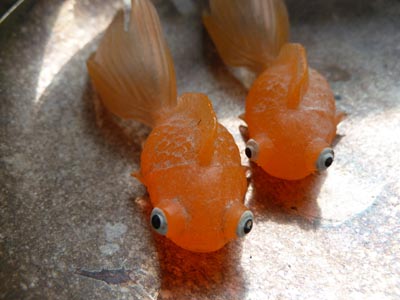
Colour of the month for August: orange.

Monday, July 30, 2012

Zen in every-day life...


I’ve been following India Flint’s blog, „Not all those who wander are lost“ for a while now, and discovered a link to the entry „Simplicity Redefined“ on the blog ZenHabits not too long ago. 
I am not a strictly Zen person, though I do appreciate many of the things I know about it.
I had a first chance to apply the attitude formulated in this entry just about 10 days ago. I myself have repeatedly discovered that plans are made only to be altered. That's life. But this – "embrace what comes to you" – is really taking it a step further, I think.
Ten days ago my son developed a fever in the afternoon, and it was clear that he would not be able to go to school the next day. My husband was away for a seminar, and my son would have gone to his drum lesson after school and then to visit a friend – I would have had a perfectly free day for getting lots of work done. Now he was sick at home, but not sick enough to feel the need to stay in bed and rest. So we spent some time trying out my new device to roll up wool.


The rest of the day was spent playing games, reading, more games, more reading...
We had a good time, and although I did not get any work done that day (and felt the mounting pressure), I think it was a day very well spent.
These days now I am currently going through another phase of active application of that ZenHabit...
I’ve been waiting for the fabrics to start dyeing my July collection for the fabric club. Which should have arrived by the middle of the month, but had been delayed in delivery from the States, and then held up by customs. I have now heard from the agent that it was shipped to me this morning. I have prepared the colours –


but am still waiting... Intensively. 
Be a good travler, don't make plans, accept what comes at you...
At least I can now catch up on stuff I didn’t do when my son was sick.